In the Depths

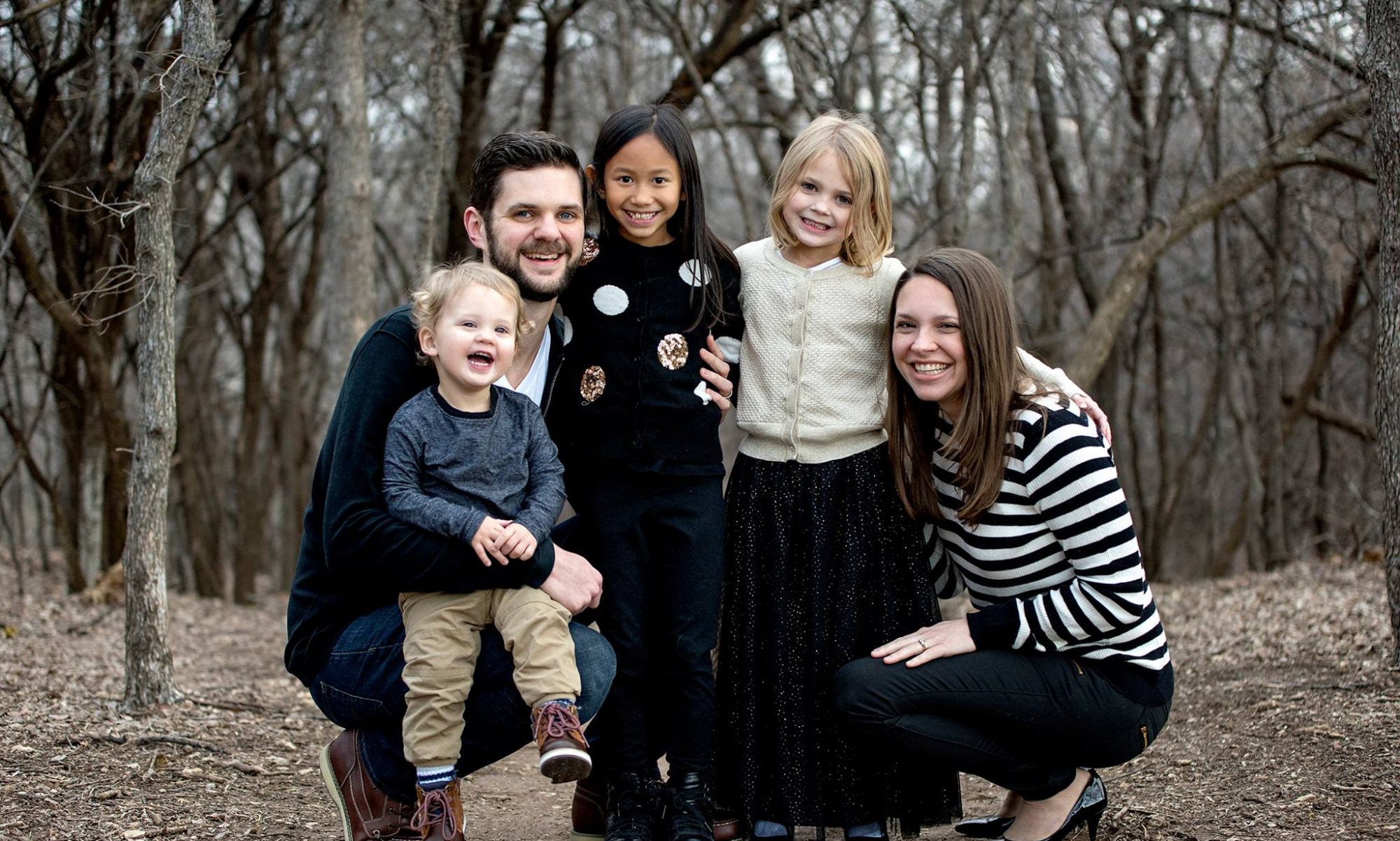
Elise was pretending to make a mad face in the picture to the left, but that face is reflective of how everyone in our family felt over the weekend.

We feel like we have been in the depths these past couple of days. A flurry of activity, a little sister’s birthday party, Mother’s Day events, scary blue monsters, bears, and ants waking us up in the middle of night (AKA nightmares), parents being accused of all manner of things (by the children), trying it again and again and again, and “time in” (as opposed to “time out”) have made for an exhausting weekend. The kind of weekend where you planned family time to celebrate a birthday and Mother’s Day, but your children just wanted their regular routine. And you are left trying to salvage the day without losing your mind. When will it end, we wonder? Will it end? Will we get back to normal again?

NT Wright offers this prayer: “Gracious Lord, when we are in the depths, come to us with your mercy and assure us of your power to rescue. And give us the patience to wait for you to do it.”

I mean that prayer to be directed at me, not my children. I need the Lord to rescue me from my exhaustion, impatience, and surly attitude so I can reconnect with my children. I have the knowledge; I have read the books; I have done the training. But can I keep my cool and recall what will best help my children or do I lose it?

Shame

In the final chapters of the book, Anatomy of the Soul, is Chapter 10 Neuroscience: Sin and Redemption. This chapter discusses shame, rupture, and repair. We and our children feel shame when we suffer a rupture, a disconnection.

The way he described shame struck a cord with me:

“…the sensation of shame is so basic to the human condition that perhaps the most precise definition is the painfully acute awareness that something is wrong with me. It is the felt sensation of deep inadequacy…Shame can develop in children as young as eighteen months of age; some researchers suspect even sooner. This suggests that the sensation and experience of shame is active in the mind and body of a child before the development of language and logical, linear thought processes. In other words, nonverbal cues such as facial expression and tone of voice may make a child feel shame long before she can logically comprehend why she feels that way.”
Thompson M.D., Curt (2010-05-24). Anatomy of the Soul (p. 193). Tyndale House Publishers. Kindle Edition.

Then Thompson goes on to describe how we use rebukes (braking) appropriately, but if we do not help our child through those braking situations more issues can develop:

“Usually in this situation, however, a parent will quickly follow an abrupt rebuke with an expression of affection or an explanation to help the child make sense of his or her action. However, when this form of braking is not followed by a clear behavioral or logical reconnection, the child feels shame, which can lead to a barren wasteland of emotional confusion. This whiplash shift between the sympathetic and parasympathetic systems can become wired so tightly in the child that the affect of shame is automatically triggered at the slightest hint of perceived disapproval.”
Thompson M.D., Curt (2010-05-24). Anatomy of the Soul (p. 194). Tyndale House Publishers. Kindle Edition.

I would hate for any child to find themself in the “barren wasteland of emotional confusion.” And I know none of you are guilty of reacting out of exhaustion (the kind where you are woken up about 4-5 times in a hour only to experience it again 4 hours later and you start to think your children hate you and sleep), but if you have perhaps experienced a weak moment, then I recommend reading Anatomy of the Soul to find out more on shame, rupture, repair and yourself. While my posts have focused on relating to my children, there is more in Thompson book about recognizing what is going on with yourself and how to foster growth for yourself not just your children. It is definitely one of those books that I’ll find myself consulting again and again as I grow in all my relationships.

Who Do I Love More?

While waiting for Maggie to join our family, someone asked, “Do you think you will love Maggie more than Elise?” I think they asked because Maggie is biological and Elise was adopted. That question has stuck with me. I remember I was initially taken aback, and emphatically assured the questioner that I would love them the same because they are both my daughters. And I do.

But sometimes it feels easier to love Maggie more, especially when I am on the receiving end of a rant or have been found lacking: Elise, “Mom, I wish she was my mom (pointing to random neighbor in middle of the street) because she’s better at blowing bubbles.” Logic did not work here about how I was given a defective bottle of bubbles. A full day later and after blowing bubbles for 20 minutes, Elise recanted and said I was the best mom. Whew, glad I got that fixed. (Maggie just doesn’t have enough words to offer her criticism of me – yet.)

So, as I have muddled over this question, I read the chapter on attachment in Curt Thompson’s book Anatomy of the Soul and found some relief:

“Each child is born into the world with a certain genetically predetermined temperament to which the parent reacts. This parental reaction then elicits the particular attachment pattern that the child tends to develop with each parent. That explains why no two siblings ever really grow up in the same home. For no two children have exactly the same temperament, so each elicits different emotional reactions from his or her parents…An attachment pattern, therefore, is relationship specific.”

I have five siblings, so this really resonated with me. My siblings and I are all different, and I have often said out loud, “Didn’t we grow up in the same home?” We did, but we all have had our own unique experiences because we each have our own relationships with our parents and with each other.

So I think I’ve been pondering a null question and confusing my love with our attachment or how we relate to each other. Will I love my children the same? Of course, I love both my children, but I do have different relationships with each of them. (Maybe I need to work on some of the emotional reactions our relationships elicit, but that’s a whole different post.) I relate differently to Maggie and Elise not because one entered my family through adoption and the other through birth, but because they are different people. And I understand now that that’s okay.

BTW, Curt Thompson (author of Anatomy of the Soul) will be the featured speaker at the 2012 Tapestry Adoption & Foster Care Conference on October 27, 2012.  Be sure to mark your calendars now to join us for this free all-day conference at Irving Bible Church.

When Will It Be Enough?

I want to read enough, study enough so I can ace parenting. The more I research and give myself; the more Elise pushes back with her emotions. When she says, “Nobody loves me…will you still love me forever…will you be here in the morning,” it feels like failure. It feels like all the work I’ve done and knowledge I’ve gained on attachment and parenting isn’t working. I feel defeated, but I can’t give up. I think maybe the next ten times I say I love you and reassure her of my stability will be enough. But maybe she will come back with her concerns, and it will feel like failure again. I think the feeling of failure stems from the lack of control I feel.

I have been reading “Anatomy of the Soul,” by Curt Thompson and he has this to say:

We have most valued knowing facts, knowing the ‘truth,’ and knowing that we are right…We have failed to see that this need to be right, to be rationally orderly and correct, subtly but effectively prevents us from the experience of being known, of loving, and being loved, which is the highest call of humanity…Knowing that we are absolutely right about a lot of things is very important to our survival and sense of well-being. That includes knowing or knowing things, about people. And about God. It is not hard to see why we are infatuated with knowing things in this way. It gives us the illusion that we are secure and in charge. We are no longer vulnerable. We believe we are safe, protected, and happy.”

I want to have gotten enough knowledge to handle every situation, to be in control. I want to manage Elise’s emotions in a way that is comfortable and not overwhelming for me – to have things under control, but it doesn’t work that way. Sometimes, she just needs to cry every morning for the past 11 months because daddy went to work, and she misses him. Logically, this does not make sense to me; I mean he comes back everyday. So do I teach her shove her feelings aside because I don’t want to deal with them or do I help her? Obviously, I help her. It is exhausting.

Thompson goes on to say some things about emotion:

  1. Emotion is something that you regulate and that regulates you.
  2. Emotional states are not influenced or created in isolation.
  3. Emotion is not debatable.
  4. While categorical emotions are universal across time, cultures, and gender, primary emotion does not always present itself in the same way.

Or in my words,

  1. I have to pay attention to my emotions and what I’m feeling.
  2. What I’m feeling affects those around me (including Elise).
  3. If Elise has been sad everyday for the past 11 months, then she’s been sad. I can’t argue with her over that.
  4. Elise is not going to express her emotions the same way I would (though that would make things easier for me).

I am still working my way through “Anatomy of the Soul”, but it is helping me understand myself so that I can better relate and understand Elise. It is exhausting and hard work, but at the end day, I do want to tell her as many times as she needs that, “I love her; I love her forever; And that I will be here in the morning.”

Try it Again

When we first learned about the Empowered to Connect concepts, Elise was eighteen months old. We still started implementing what we learned, and we are thankful that we had tools to help us through various conflicts. The tool that is helping us the most right now is “try it again.” We try everything again. At the first hint of correction, Elise will usually try to head you off by asking if she can try it again. Sometimes Elise even recreates scenarios days later so she can try it again and again and again. She loves it, and we do, too.

But sometimes, I find myself the one needing to try it again. Only, I’m not as quick as Elise to jump at a chance to redo. Usually, I’m chastising myself for losing my temper or patience again, instead of offering myself the same chance to try again at connecting with Elise – instead of modeling the behavior I want Elise to learn.

Do you let yourself try it again or only your kids? Do you give yourself grace and compassion too or only defeat and chastisement? Do you ask for forgiveness or only expect your children to?

Watch as Amy Monroe talks about learning and modeling how to repair.

Easter

Over the Easter weekend, my parents, my youngest brothers, and my sister, her husband, and their daughter came in. My brother and his wife who also live up here joined us. Elise loves when all her family comes to see her. She didn’t even mind loaning out her room to Uncle Andrew and Uncle Ben. She probably wishes she could sleep on an air mattress in mom and dad’s room every night.

On Saturday, we took the girls to the Easter Eggsperience at Irving Bible Church. Elise did everything: petting zoo, egg hunt, face painting, carnival games, and bounce houses. Maggie participated in the egg hunt with some help from her daddy. The girls had a good time, so we will be taking them back next year.

Here are some pictures of all the fun they had over the weekend.

Adopt vs Adopt

Elise  does a lot that gets me thinking. She’s learning to recognize rhymes, but right now she just points out parts of words that are the same: upstairs/downstairs or inside/outside.  In this particular exchange, she focused on the word adopt.

Elise asks, “Remember you adopted me?”

ME: I do remember.

Elise, “And Mary adopted Jesus. That’s the same word adopt, adopt.”

ME: Who told you Mary adopted Jesus?

Elise, “God. I prayed to him and He said Mary and Joseph adopted Jesus. And then He died.”

Now, I am not interested in getting technical with her statement. It’s just an insight into an almost 4 year old’s mind. But isn’t it cool that she’s already identified herself with Jesus because of adoption? And isn’t cool that’s she right? Adopt and adopt – it is the same word. We adopted her into our family and God adopts us into his family.

Then just yesterday, we were walking around the mall and Elise asked, “Mom, when are you going to adopt Maggie?” I said, “I am not going to adopt Maggie because I gave birth to her.” She said, “You only adopted me?” Me, “Yes.” I only adopted Elise, but it only changed our lives forever. I’m so thankful for adoption

Spring Break

Click here to view this photo book larger

Start your own Shutterfly Photo Book today.

Kisses From Katie

I recently read “Kisses from Katie,” by Katie Davis. On the cover it says a story of relentless love and redemption. Katie’s story is truly inspiring. It all started when she decided to move to Uganda after high school and delay her first year of college. Once there, she was willing to do anything and everything to help the people of Uganda which included taking in sick orphaned children and finding a home for them. (This is a gross paraphrase.) As she did this, she began to think about adoption, “Knowing what adoption would entail, I thought trying to accomplish it would be crazy. I found myself desperately praying that God would show me what to do. And that is when it happened.’”

As Katie began adding children to her family she wrestled with many adoption issues. She talks about building a relationship, so she could move from caregiver to Mom. She talks of wrestling with the hurt her children experienced and grieving for their loss. She talks about how each child’s “pain and trauma manifested in different ways and through different behaviors,” and she never questions whether she made the right choice. She also doesn’t say that it’s easy.

“I knew that one of God’s purposes in placing me here was to grow in me, through my children, this heart for adoption. In an effort to be real, I will tell you: It was hard…Adoption is wonderful and beautiful and the greatest blessing I have ever experienced. Adoption is also difficult and painful. Adoption is a beautiful picture of redemption. It is the Gospel in my living room. And sometimes, it’s just hard…It’s hard to have your mom be a different color than you because inevitably people are going to ask you why…It’s hard when you have to make up your birthday. It’s hard when you can’t understand the concept of being a forever family yet, because your first family wasn’t forever.”

I don’t want to give away everything Katie says because she allows herself to be transparent and tell a beautiful story, her story. The way she talks about mistakes, struggles, and questions makes you forget she started this journey at 19. Much of Katie’s story is not adoption related, but as she works through different adoption related issues in her life, she’s not afraid to share the good and the bad, the triumphs and heartbreaks.

I’ll admit that I did do a general purging of my house after I finished reading her book. I mean you can’t read these sentences and not feel a little conviction, “I put value in things. These children, having no things, put value in God.” But don’t be scared to read the book for fear of being called to Uganda; read her book because she tells a story of God is working in her life, her children’s lives, and those around her.

http://kissesfromkatie.blogspot.com/

Adoption in Prime Time

Sometimes after the children are asleep, I watch television, and I have noticed several adoption stories taking place on different networks and different shows. ABC has Modern Family and Grey’s Anatomy. NBC has Parenthood and now Smash. And, CBS has NCIS. Now, I am not endorsing any of these shows or suggesting you watch any of them; I just found it interesting how common an adoption story is becoming to Prime Time television.

While the most common adoption story playing out is international adoption, Parenthood has an adoptive family matched with a birth mother, and NCIS had a character find out as an adult that she was adopted. I am always intrigued to see how screenwriters are going to let the different elements of adoption play out. Scenes from different shows caught my attention. On Smash, a couple with a teenager is in the process of adopting from China. When the dad learns the shortest the wait could be is 2 years, he doesn’t want to move forward with the process anymore. The teenager overhears his parents talking and later says, “…She’s waiting for us to come and get her. What’s going to happen to her if we don’t go get her?”

Another scene that caught my eye was on Parenthood. After the birthmother gives birth to a baby boy, the nurses place the baby boy in the adoptive mother’s arms and the birthmother turns her face away in anguish. They ended the episode implying the birthmother might change her mind, but they didn’t really make that clear.

The last scene is from NCIS. Through a series of events one of the main characters discovered she’s adopted. As she wrestled with this discovery and revealed it to another character, she said, “It’s me. I’m adopted.”

In the above-mentioned scenes adoption affects more than just the adoptive parents. These particular scenes highlight the birthmother, the adopted child, and nuclear family members; adoption affects these people and many more. It will affect anyone that you do life with.

As my husband and I began our adoption process, we read a book called Adoption is a Family Affair. If you haven’t read this book, I would suggest it as a way to start thinking about how adoption is going to affect your family and friends. There might be scenarios you haven’t considered or aspects you may want to explain more or that you may want to keep confidential. Whatever your situation, it’s beneficial to think about your family and friends and how you can help educate them on the adoption process. You are going to want your family and friends to be supportive, so take some time to support them.

Panorama theme by Themocracy